Small workshops often face a dilemma: they need the precision and output of industrial rolling mills, but lack the space, budget, or power supply to install full-scale equipment. Portable rolling mills have emerged as a potential solution, promising flexibility without sacrificing quality. But can a compact machine truly deliver industrial results? The answer depends on understanding the technology, the materials processed, and realistic performance benchmarks. This article breaks down the capabilities, limitations, and real-world applications of portable rolling mills, helping workshop owners make an informed decision.
Understanding the Capabilities of Portable Rolling Mills
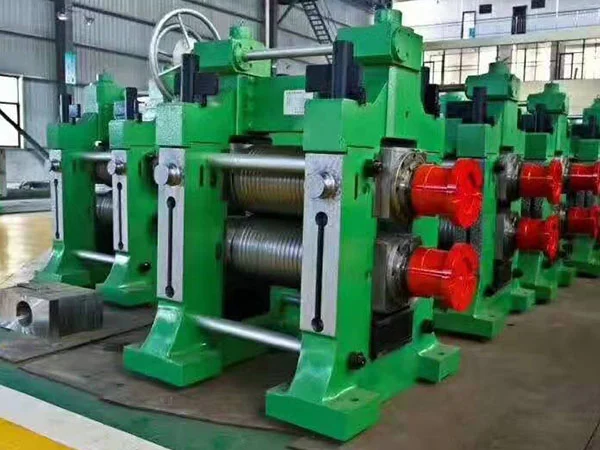
Portable rolling mills are designed for mobility and space efficiency. They typically feature a smaller footprint, reduced weight, and lower power requirements compared to stationary industrial mills. However, they are not simply scaled-down versions. Engineering compromises exist in motor power, roll rigidity, and control systems.
Key Features and Specifications
Most portable mills used in small workshops handle materials such as sheet metal, wire, or small structural sections. Common specifications include:
- Roll diameter and length: Typically 100–300 mm, limiting maximum strip width to around 200–250 mm.
- Motor power: 1.5–5 kW, sufficient for low-volume reduction of soft metals like aluminum, copper, and mild steel.
- Variable speed control: Allows adaptation to different material thicknesses and required surface finish.
- Manual or hydraulic adjustment: Affects precision and repeatability.
These specs make portable mills ideal for prototyping, custom fabrication, and low-batch production. For high-volume continuous processing, they fall short—but that is not their intended use.
Comparing Portable vs. Industrial Rolling Mills
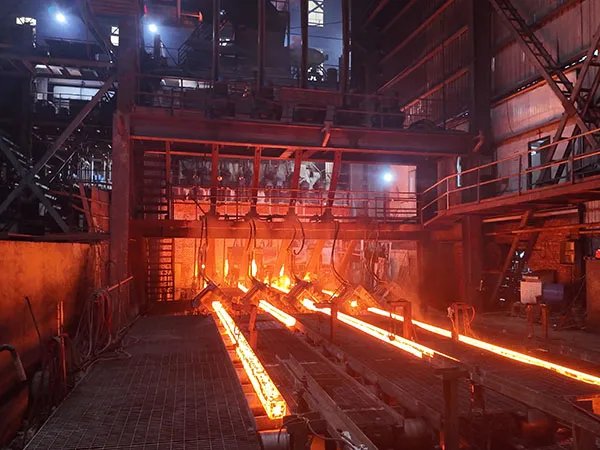
Industrial mills are built for maximum throughput and tight tolerances over thousands of meters. Portable mills target flexibility and lower cost. Here is a direct comparison of key performance factors:
- Thickness tolerance: Industrial mills achieve ±0.01 mm or better via hydraulic screw-downs and automatic gauge control. Portable mills typically achieve ±0.05–0.1 mm, acceptable for many workshop applications.
- Surface finish: Industrial mills use polished rolls and coolant systems for mirror-like surfaces. Portable mills produce a matte to semi-bright finish depending on roll condition and lubrication.
- Throughput: Industrial lines run at 50–200 m/min. Portable mills operate at 1–5 m/min due to smaller motors and manual feed.
- Capital cost: Industrial mills start at $100,000+; portable mills range from $5,000 to $30,000.
- Energy consumption: Portable mills use single-phase or low three-phase power, often <10 kW.
- Maintenance: Portable mills have simpler mechanics, easier to repair in-house.
For small workshops targeting low-volume, high-variety work, the portable mill's trade-offs are often acceptable. The key is matching the machine to the required tolerance and production volume.
Real-World Applications and Practical Results
To answer whether portable mills deliver industrial results, we must define "industrial." If industrial means meeting standard material specifications (e.g., ASTM A36 for steel sheet), many portable mills can achieve the required mechanical properties after proper pass scheduling. If industrial implies 24/7 operation with minimal downtime, portable mills are not designed for that.
Material Thickness and Tolerances
In practice, a well-maintained portable mill from a reputable manufacturer like gyssljx can reduce 3 mm mild steel to 1.5 mm in multiple passes with thickness variation within 0.08 mm. That meets basic industrial standards for many non-critical parts. For aluminum, tolerances improve due to lower roll separating force. However, for precision aerospace or medical components, a portable mill would require additional finishing steps.
Throughput and Productivity
A small workshop rolling 500–1000 kg of material per shift will find portable mills cost-effective. Beyond that, the slow feed rate and manual handling become bottlenecks. Industrial mills excel at continuous high-volume runs, but the capital investment is prohibitive for most small businesses.
How to Maximize Performance in a Small Workshop Setting
To get the most out of a portable rolling mill, follow these guidelines:
- Select the correct roll material and surface finish for your metal type.
- Use proper lubrication to reduce friction and improve surface quality.
- Plan multiple light passes rather than heavy single reductions to control thickness and avoid work hardening.
- Calibrate the roll gap regularly using feeler gauges.
- Invest in a basic roll grinder to maintain roll profile over time.
Companies like gyssljx offer comprehensive support, including training on setup and maintenance, which significantly shortens the learning curve. Their portable models are engineered with reinforced frames and adjustable roll tables to improve rigidity—a critical factor for consistent output.
Frequently Asked Questions
Q: Can a portable rolling mill handle stainless steel?
A: Yes, but with limitations. Stainless steel requires higher roll force and more passes. Portable mills with at least 3–4 kW power and hardened rolls can process 304 stainless up to 2 mm initial thickness.
Q: How long does it take to change rolls on a portable mill?
A: Most models allow roll changes within 10–20 minutes using basic tools. Quick-change systems are available as an option from gyssljx.
Q: Do portable mills require special electrical installation?
A: They typically run on standard 220V single-phase or 380V three-phase, making them compatible with most workshops without expensive upgrades.
Q: What is the typical lifespan of a portable rolling mill?
A: With proper maintenance, 10–15 years for the mechanical core. Rolls may need dressing every 6–12 months depending on usage.
Conclusion
Portable rolling mills do not replace industrial mills in terms of absolute throughput or micrometer precision. However, for the majority of small workshop applications—custom fabrication, repair work, art metal, and light production—they deliver results that are functionally industrial-grade at a fraction of the cost. The choice ultimately depends on your required tolerances, volume, and budget. By selecting a high-quality unit from a trusted supplier like gyssljx and applying proper process control, you can achieve consistent, repeatable outcomes that meet your customers' expectations. For workshops scaling up, portable mills serve as a flexible entry point before committing to larger capital equipment.