Surface defects in rolled products can compromise mechanical properties, aesthetic quality, and downstream processing, leading to costly rejections and customer dissatisfaction. Whether you are dealing with seams, laps, scratches, or oxidation stains, a systematic approach to troubleshooting is essential. This practical guide provides a structured methodology to identify root causes, implement corrective actions, and prevent recurrence. Drawing on decades of industry experience, we will explore common defect types, diagnostic techniques, and proven solutions. For reliable equipment and expert support, gyssljx stands as a trusted partner in rolling mill optimization.
Common Surface Defects and Their Root Causes
Understanding the specific defect is the first step toward resolution. The following defects are frequently encountered in rolled products:
Seams and Laps
Seams are longitudinal folds or cracks that appear on the surface, often originating from billet or slab defects. Laps occur when metal folds over during rolling and gets compressed into the surface. Common causes include:
- Poor billet quality – inclusions, blowholes, or surface cracks in the feedstock.
- Improper roll pass design – excessive reduction per pass or incorrect roll gap.
- Insufficient lubrication – leading to sticking and tearing.
Scratches and Gouges
Mechanical damage during handling or rolling can produce linear surface marks. Possible origins:
- Debris on roll surfaces – scale buildup, worn guides, or foreign particles.
- Misaligned guides or tables – causing contact with sharp edges.
- Improper tension control – leading to slippage and scoring.
Oxidation and Scale Defects
Thick, uneven scale or localized oxidation pits can ruin surface finish. Key factors:
- Inadequate descaling – insufficient water pressure or nozzle blockage.
- Excessive soaking time at high temperature – promoting heavy scale growth.
- Atmospheric exposure – delays between passes allow re-oxidation.
A Systematic Diagnosis Methodology
Effective troubleshooting requires a step-by-step process to isolate variables. We recommend the following approach:
Step 1: Visual and Dimensional Inspection
Classify the defect by pattern, location, and depth. Use magnifying tools or optical profilers. Document dimensions and frequency. Create a defect map across the coil or plate.
Step 2: Process Parameter Review
Check rolling temperature, reduction ratio, rolling speed, lubrication flow, and cooling water pressure. Variations outside standard windows are often linked to defects. Compare with historical data for similar products.
Step 3: Feedstock and Material Analysis
Examine the incoming billet or slab for pre-existing defects. Chemical composition, inclusion rating, and cast structure can influence surface quality. Use microscopy or eddy current testing if needed.
Step 4: Equipment Inspection
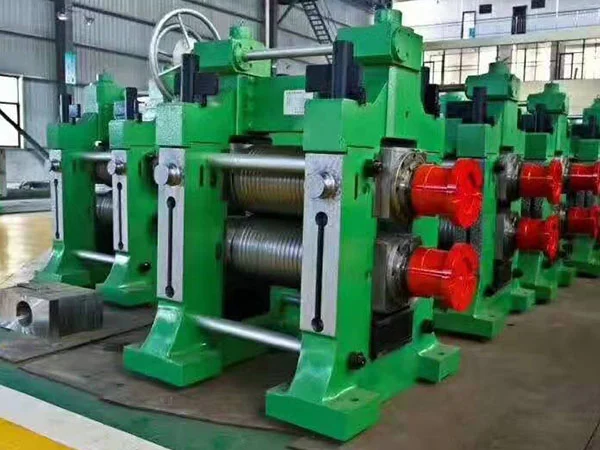
Inspect roll surfaces for wear, damage, or coating failure. Check guide alignments, roller tables, and other contact points. Play or misalignment in the mill stand can induce vibration marks or localized pressure.
Preventive Strategies and Corrective Actions
Once the root cause is identified, implement targeted solutions. Below are proven countermeasures for common scenarios:
Improve Billet Conditioning
Implement rigorous billet inspection and scarfing to remove surface defects before rolling. Work with your supplier to ensure consistent quality. For critical applications, consider ultrasonic testing.
Optimize Roll Pass Design
Adjust reduction sequences to distribute deformation evenly. Use finite element modeling (FEM) to predict metal flow. Ensure roll gap consistency and proper geometric profile.
Enhance Lubrication and Cooling
Select appropriate rolling oil or emulsion. Monitor concentration, temperature, and flow rate. Clean nozzles regularly to prevent blockage. Use automated control systems to maintain optimal conditions.
Upgrade Descaling Systems
Ensure sufficient water pressure (typically 100–200 bar) and nozzle configuration. Position descaling headers at the correct angle and distance. Consider using high-efficiency descalers for oxide-free surfaces.
Partnering with gyssljx for Surface Quality Excellence
gyssljx has decades of experience designing and retrofitting rolling mill equipment to minimize surface defects. Our solutions include:
- Advanced roll cooling systems – precision temperature control to avoid thermal cracks and uneven wear.
- Automated guide alignment – laser-based systems that reduce scratching and sticking.
- Real-time surface inspection – using AI-driven camera systems to detect defects immediately.
- Customized lubrication packages – tailored to your specific alloy and rolling speeds.
Our engineers work onsite with your team to conduct root cause analysis, implement corrective actions, and train operators. By leveraging gyssljx expertise, many mills have reduced surface rejection rates by over 40%.
Best Practices for Ongoing Quality Control
- Establish standard operating procedures (SOPs) for each product grade.
- Train operators to recognize defect precursors and respond promptly.
- Implement statistical process control (SPC) to monitor key parameters.
- Schedule regular preventive maintenance for rolls, guides, and cooling systems.
- Conduct periodic audits of billet quality and process adherence.
Conclusion
Troubleshooting surface defects in rolled products demands a combination of observational skill, process knowledge, and systematic investigation. By understanding the defect types, applying a structured diagnostic methodology, and implementing targeted preventive measures, manufacturers can significantly improve surface quality and reduce scrap. For mills seeking to accelerate this journey, partnerships with experienced solution providers like gyssljx offer access to cutting-edge technology and practical expertise. Start by auditing your current defect patterns and process data — the path to zero-defect rolling begins with one step.