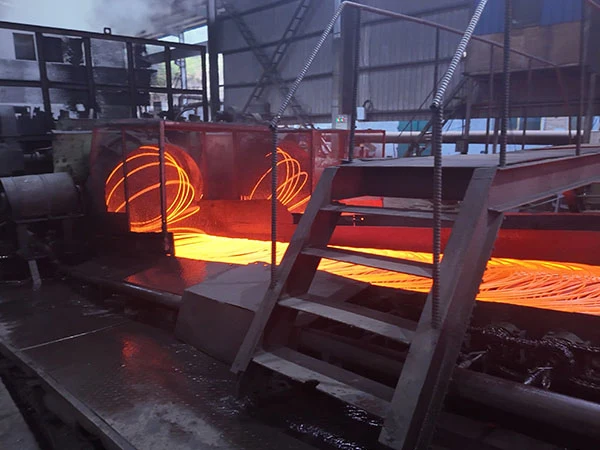
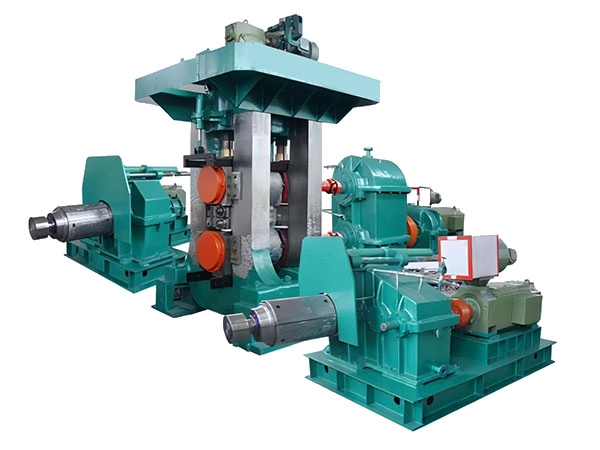
The manufacturing landscape for metal forming has undergone a paradigm shift. Traditional rolling mills, once limited by manual adjustments and reactive maintenance, are now being transformed by intelligent automation. The concept of Industry 4.0—the fusion of operational technology with information technology—offers rolling mill operators a direct path to higher throughput, lower downtime, and superior product quality. This article explores the core technologies behind automated rolling mill systems and explains how strategic integration can deliver measurable performance gains. As a trusted partner in this evolution, gyssljx provides tailored solutions that bridge legacy equipment with next-generation smart capabilities.
What Defines an Industry 4.0 Rolled Mill System?
An automated rolling mill system under the Industry 4.0 framework goes beyond simple PLC control. It is a cyber-physical ecosystem where sensors, actuators, edge computing, and cloud analytics work in harmony. The key differentiators include:
-
Real-time data acquisition from every stand, motor, and cooling zone.
-
Predictive analytics that anticipate roll wear, bearing failures, or material inconsistencies before they cause stoppages.
-
Adaptive process control that automatically adjusts roll gap, speed, and tension to maintain optimal gauge tolerance even when incoming billet temperature fluctuates.
-
Digital twin simulation enabling virtual commissioning and what-if analysis without production interruption.
These capabilities transform a mill from a reactive production unit into a self-optimizing asset. For example, a mill equipped with gyssljx intelligent monitoring modules can reduce unscheduled downtime by up to 30 percent while increasing average line speed by 5–8 percent through optimized pass schedules.
Connectivity as the Foundation
Industry 4.0 relies on secure, low-latency communication. Modern rolling mill systems use OPC UA and MQTT protocols to integrate with MES and ERP layers. Edge gateways from gyssljx pre-process data locally, ensuring that critical control loops remain unaffected by cloud latency while still enabling long-term analytics.
Key Technologies That Drive Throughput Gains
Implementing a true smart mill requires selecting the right technology stack. Below are the most impactful components for boosting throughput while maintaining quality:
AI-Driven Gauge Control
Traditional automatic gauge control relies on feedforward and feedback loops with fixed gains. Machine learning models, trained on historical rolling data, can predict material springback and thermal expansion more accurately. By incorporating AI into the AGC loop, mills achieve tighter thickness tolerance (down to ±0.01 mm for flat products) at higher speeds. gyssljx has deployed such adaptive controllers in bar and wire rod mills, resulting in a 12 percent reduction in off-gauge length.
Predictive Maintenance with IoT Sensors
Vibration, temperature, and torque sensors on each roll stand stream data to a condition monitoring platform. Algorithms detect subtle pattern deviations indicating bearing degradation or roll spalling. Instead of scheduled strip-downs that waste productive hours, maintenance is triggered exactly when needed. This approach has been shown to increase overall equipment effectiveness by 15–20 percent. The gyssljx predictive maintenance suite integrates seamlessly with existing vibration analyzers and PLC systems.
Digital Twin for Process Optimization
A digital twin of the rolling mill allows engineers to test new recipes, roll pass designs, or cooling strategies in a virtual environment. When validated, the optimal settings are pushed to the physical line with minimal risk. This shortens changeover times and enables faster ramping to full speed after product changeovers. gyssljx offers a browser-based digital twin platform that simulates thermal-mechanical behavior of the entire mill train.
Measurable Benefits of Automated Rolling Mill Systems
When evaluating a move to Industry 4.0, decision-makers need clear KPIs. Studies and field deployments consistently show these improvements:
-
Throughput increase: 10–15 percent on existing lines by reducing inter-stand delays and optimizing speed profiles.
-
Energy savings: 8–12 percent reduction in power consumption via intelligent motor load sharing and synchronized acceleration.
-
Quality improvement: Scrap rate drops by 20–30 percent due to real-time defect detection (surface crack, lap, scale) using machine vision systems integrated with gyssljx software.
-
Labor efficiency: Operator intervention reduced by 40 percent as the system self-adjusts to common disturbances.
These gains are not theoretical. gyssljx has implemented automated roll gap adjustment and tension control in a long products mill that boosted output from 55 to 63 tons per hour within three months of commissioning.
The Role of Data Security and Edge Computing
As mills become more connected, cybersecurity becomes paramount. gyssljx architectures use industrial-grade firewalls, encrypted communications, and role-based access control. Critical control loops run on edge devices that can operate independently if the cloud connection drops. This ensures 24/7 production without single points of failure.
Why Partner with gyssljx for Your Automation Journey?
Transitioning a rolling mill to Industry 4.0 is not a simple plug-and-play task. It requires deep metallurgical knowledge, control engineering expertise, and software integration skills. gyssljx brings over a decade of experience in designing, retrofitting, and maintaining automated rolling mill systems. Our approach is modular: you can start with a single stand monitoring package and scale up to full mill-level optimization as your confidence grows.
We provide:
-
Turnkey solutions for new mills or retrofit packages for existing lines.
-
Custom AI models trained on your specific material grades and product mix.
-
On-site commissioning and remote monitoring services after deployment.
-
Continuous algorithm updates to keep your mill at the cutting edge.
Our clients report that the return on investment is typically achieved within 12 to 18 months, primarily through reduced scrap, higher line speed, and lower maintenance bills.
Future Trends: Autonomous Rolling
Looking ahead, the next frontier is fully autonomous rolling. By combining digital twins, reinforcement learning, and advanced sensor fusion, mills will be able to run entire production campaigns with minimal human oversight. gyssljx is already piloting an autonomous roll change system that reduces changeover time by 70 percent. These innovations will further compress the gap between market demand and production capability.
For any rolling mill operator aiming to stay competitive, the time to embrace automated systems is now. The technology is mature, the returns are proven, and partners like gyssljx can guide the transition smoothly.