In the demanding environment of modern steel and metal production, rolling mills endure extreme mechanical forces and generate immense heat during operation. The performance of these mills is directly influenced by how effectively excess heat is managed. Cooling systems are not just auxiliary—they are central to ensuring product precision, reducing equipment wear, and optimizing energy usage. Among the cooling strategies deployed, water-based and oil-based systems are the most prevalent, each offering unique advantages and presenting specific operational challenges. Understanding these differences is essential for engineers, plant managers, and maintenance teams striving for optimal efficiency, reduced downtime, and cost-effective production.
The Critical Role of Cooling in Rolling Mills
Metal slabs or strips undergoing rolling are subjected to high friction and deformation stresses. This process generates significant heat, which, if not properly controlled, can compromise both product quality and equipment integrity. Excess heat can lead to thermal expansion, roll distortion, surface defects, accelerated bearing wear, and damage to gears and hydraulic components. Over time, this can disrupt production schedules, increase maintenance frequency, and raise operational costs.
Effective cooling systems serve multiple vital purposes:
Temperature regulation: Maintaining precise roll and metal temperatures prevents warping, uneven thickness, and surface imperfections.
Lubrication support: Certain cooling fluids double as lubricants, lowering friction and energy demands on the mill.
Equipment protection: Consistent cooling prolongs the life of rolls, bearings, hydraulic systems, and structural components.
Energy efficiency: Proper heat management reduces the load on auxiliary cooling and ventilation systems, saving energy.
Selecting the right cooling method—whether water, oil, or a hybrid solution—requires careful consideration of operational demands, material characteristics, environmental constraints, and cost implications.
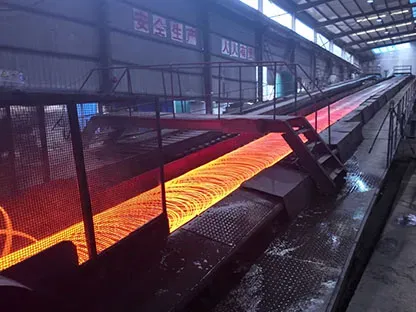
Water Cooling Systems: High Efficiency at Low Cost
Water-based cooling remains the most widely adopted solution in rolling mills. Its popularity stems from water’s exceptional ability to absorb and transfer heat. Typically, water is circulated through the rolls or roll housings, collecting heat and directing it to external heat exchangers for dissipation.
Advantages of water cooling include:
Rapid heat absorption: Water’s high specific heat allows it to quickly remove thermal energy from high-temperature operations, maintaining dimensional accuracy and surface integrity.
Low pumping energy: Its low viscosity reduces the energy required to circulate fluid across channels and through cooling loops.
Cost-effectiveness and accessibility: Water is inexpensive, abundant, and easy to replenish, simplifying maintenance and operational planning.
Challenges of water cooling:
Corrosion potential: Untreated water can corrode rolls, piping, and heat exchangers, demanding rigorous water treatment and monitoring.
Temperature-related issues: In colder climates, water requires antifreeze solutions or heating, and mineral scaling may gradually reduce flow efficiency.
Limited lubrication: Water cannot provide sufficient lubrication, so additional lubricants are often necessary to reduce friction during rolling.
To maximize water cooling performance, operators should maintain proper flow rates, monitor water quality, and implement temperature control sensors. This ensures the heat is efficiently extracted without causing thermal shock or localized hotspots that could damage the equipment.
Oil Cooling Systems: Protection and Lubrication Combined
Oil-based cooling systems are favored in applications where both heat management and lubrication are critical. High-strength alloys, precision rolling operations, and high-temperature processes often rely on oil to achieve consistent results.
Key benefits of oil cooling include:
Dual function: Oil simultaneously transfers heat and provides lubrication, reducing wear on rolls and bearings.
Corrosion resistance: Unlike water, oil naturally protects metal surfaces from rust and oxidation, extending equipment lifespan.
High-temperature stability: Oil maintains its properties across a broad temperature range, avoiding boiling or freezing challenges.
Drawbacks of oil cooling:
Lower heat transfer efficiency: Oil absorbs and carries heat less effectively than water, necessitating larger volumes or higher flow rates.
Higher cost: Oil is more expensive, and filtration, maintenance, and disposal add operational overhead.
Safety considerations: Hot oil leaks can pose fire risks, requiring stringent containment, monitoring, and emergency protocols.
Proper oil cooling design includes controlled circulation, filtration systems to remove contaminants, and temperature regulation to maintain viscosity for both lubrication and heat transfer.
Comparative Analysis: Choosing the Right Cooling Strategy
When comparing water and oil cooling for rolling mills, several factors influence the optimal choice:
Heat removal efficiency: Water excels in rapid cooling for high-speed mills and operations with sudden heat spikes.
Lubrication and wear prevention: Oil offers superior protection in operations where friction and corrosion are significant concerns.
Operational cost and maintenance: Water is more economical and easier to manage, whereas oil requires specialized handling, filtration, and safety measures.
Environmental and safety impact: Water poses minimal environmental risk, while oil demands careful storage, handling, and disposal to prevent contamination and fire hazards.
Many modern facilities adopt hybrid or enhanced cooling solutions, such as water with corrosion inhibitors or water-oil emulsions, balancing rapid cooling with lubrication and protective properties.
Best Practices for Optimizing Cooling Performance
To maximize cooling efficiency and equipment longevity, rolling mill operators should adopt these strategies:
Routine maintenance: Regular inspection of pipes, pumps, heat exchangers, and valves to detect leaks, scaling, or corrosion.
Fluid quality management: Monitor water hardness, chemical composition, and oil viscosity to ensure consistent heat transfer.
Real-time temperature monitoring: Deploy sensors to track both fluid and roll temperatures, allowing automated adjustments for optimal cooling.
Flow optimization: Maintain appropriate flow rates that balance thermal extraction with energy consumption while avoiding hotspots.
Advanced cooling technologies: Consider water-oil emulsions, nanofluids, or corrosion-inhibited water for challenging materials or extreme operating conditions.
Applying these practices can significantly reduce unplanned downtime, extend the lifespan of rolls and bearings, and ensure consistent product quality.
Conclusion
Selecting the right cooling system is a critical decision for rolling mill efficiency and long-term equipment health. Water cooling provides rapid heat removal, cost advantages, and straightforward maintenance, making it ideal for high-speed or heavy-duty operations. Oil cooling, conversely, offers lubrication, corrosion protection, and stability under extreme temperatures, essential for high-precision or high-stress applications.
In many cases, a well-engineered hybrid approach, combining the rapid heat dissipation of water with the protective and lubricating properties of oil, delivers the best results. Understanding the strengths and limitations of each method allows operators to improve productivity, reduce maintenance frequency, and maintain high-quality output—a decisive factor in today’s competitive metal processing industry.
Call-to-Action
Steel and metal processing facilities seeking to enhance rolling mill performance should engage with industrial cooling experts to design customized solutions. Strategic investment in advanced cooling systems not only improves operational efficiency but also reduces maintenance costs, enhances equipment longevity, and ensures consistent product quality, providing a clear competitive advantage in modern manufacturing.