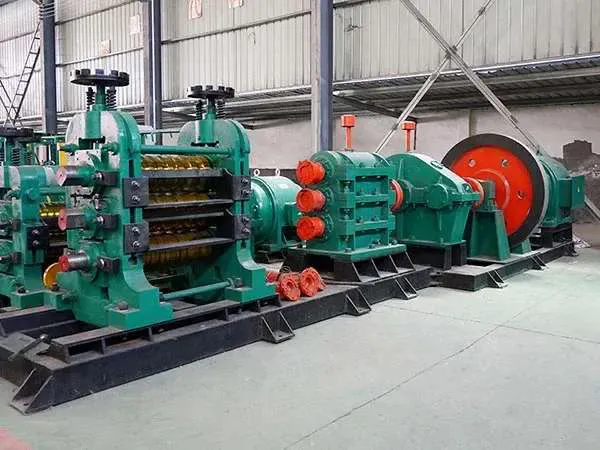
Cold-rolled steel and aluminum coils are indispensable materials in modern industrial manufacturing. With their high dimensional accuracy, excellent surface quality, and stable mechanical properties, they are widely used in industries such as automotive, home appliances, construction, and precision manufacturing. Understand the complete cold rolling process for steel and aluminum coils, from pickling to annealing and finishing. This guide is designed for steel mills, aluminum plants, and industrial buyers seeking high-precision coil production.
Cold Rolling Process Overview
The cold rolling process typically includes the following key steps:
Full Flow Diagram:
Pickling → Cold Rolling → Annealing → Finishing Mill/Tension Leveling → Coiling
Each step is crucial, directly affecting the surface quality, thickness accuracy, and mechanical properties of the final product. The cold rolling production process will be analyzed in detail step by step below.
Step 1: Raw Material Preparation (Pickled Hot-Rolled Coil)
The first step in cold rolling production is selecting high-quality hot-rolled coils and performing pickling.
The Importance of Oxide Scale Removal: Pickling removes oxide scale and rust from the surface of hot-rolled coils, ensuring the material's ductility and surface smoothness during cold rolling.
The clean and smooth surface of the pickled coil provides a reliable foundation for subsequent cold rolling.
Step 2: Inlet Section and Tension Setting
At the inlet section of the cold rolling production line, the coil needs to be connected and tension adjusted.
Threaded connections, welding, and coil connections: These ensure that the material does not break or loosen during continuous production.
Ensuring a Stable Material Supply: Tension adjustment controls the flatness and thickness uniformity of the material during rolling.
Scientific inlet settings effectively reduce downtime and improve production line efficiency.
Step 3: Cold Rolling Process (Core)
Cold rolling is the core of the entire process, reducing material thickness and improving mechanical properties through multi-stage mills.
The Role of Rolling Stands (4-high / 6-high): Multi-roll mills enable precise thickness control while reducing surface ripples and deformation of the coil.
Reduction Rate / Pass Schedule: Based on material specifications, determine a reasonable reduction rate and number of rolling passes for each pass.
Thickness Reduction and Hardening: During cold rolling, the material hardens, increasing yield strength, but also increasing the necessity of subsequent annealing.
By strictly controlling rolling parameters, high precision requirements can be ensured for cold-rolled coils.
Step 4: Annealing/Heat Treatment
After cold rolling, the material often hardens, requiring annealing or heat treatment to restore ductility and uniform microstructure.
Recovery Process After Cold Hardening: Annealing relieves internal stress, improves ductility, and prevents cracking during subsequent processing.
Common Processes:
Batch Annealing
Continuous Annealing
The choice of annealing method depends on production scale, material specifications, and end application.
Step 5: Finishing Mill/Temperature Rolling
The annealed coil needs to be tempered and quenched on a finishing mill.
Improve surface roughness and shape accuracy: Reduce ripples and improve surface flatness.
Prevent yield plateaus: Through tension control, ensure stable mechanical properties of the coil material during subsequent processing and use.
Temperature rolling is one of the key steps in achieving high-precision coil materials.
Step 6: Surface Treatment and Finishing
Finally, the coil material undergoes surface treatment and finishing to meet customers' stringent requirements for appearance and performance.
Tension balancing: Ensures uniform edge curling of the coil material, avoiding edge warping.
Coating: Some applications require coating, such as automotive steel and building aluminum.
Final inspection: Surface defect inspection, thickness measurement, and mechanical property testing ensure the finished product meets standards.
Final Product: High-Precision Cold-Rolled Coil
After completing the entire process, the resulting cold-rolled coil has the following characteristics:
Surface Quality: Smooth, free of oxide scale, and with few defects
Dimensional Accuracy: Uniform thickness and stable width
Application Scenarios: Suitable for automotive manufacturing, home appliances, building materials, and the production of various industrial parts
High-precision cold-rolled coil not only meets stringent process requirements but also provides a reliable foundation for downstream processing.
Conclusion
Understanding the complete cold rolling process helps manufacturers optimize production efficiency and provide materials with stable and superior performance. From pickling to final coiling, every step is crucial for producing high-quality cold-rolled steel and aluminum coils.